

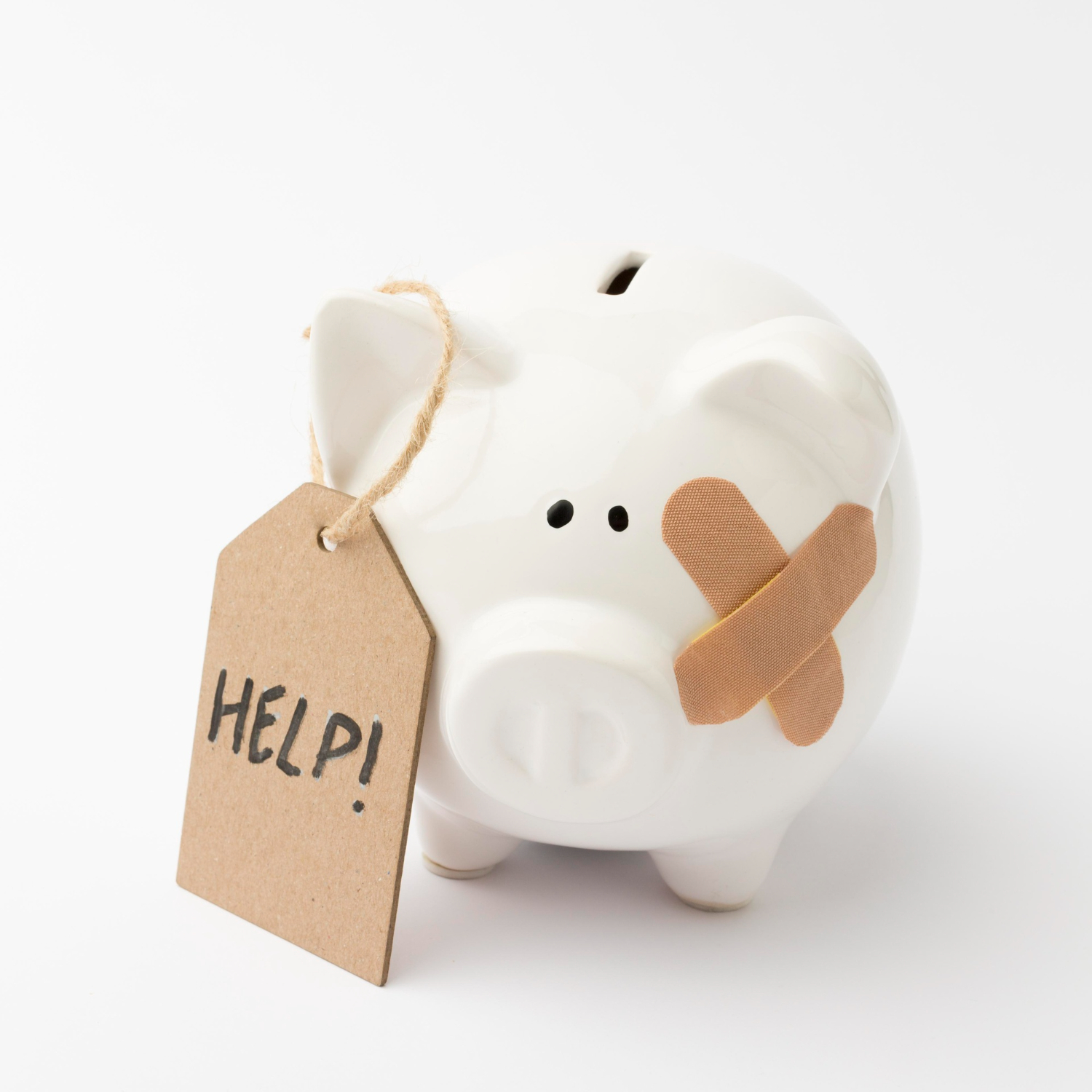
The Lifeline of Financial Security: Understanding the Emergency Fund
What Exactly Is an Emergency Fund?
An emergency fund is a dedicated savings account designed to cover large, unexpected expenses. Think of it as your personal financial firefighter, ready to extinguish a crisis before it can burn through your budget. In my years as a financial coach, I’ve seen how this one account can mean the difference between a manageable setback and a devastating debt spiral.
This money isn’t for planned purchases like holiday gifts or vacations. Its sole purpose is to handle true emergencies that could otherwise destabilize your life.
A true emergency is typically:
1. Unexpected: A surprise medical bill or sudden job loss.
2. Necessary: A critical car repair to get to work or urgent home repair like a burst pipe.
3. Urgent: An expense that cannot be postponed.
This fund acts as a critical buffer between you and high-interest debt. When a surprise expense erupts, you can draw from your savings instead of reflexively reaching for a credit card or predatory payday loan. To be effective, this money must be kept in a liquid account—meaning you can access it within a day or two—but separate from your daily checking account.
This simple separation removes the temptation to use it for non-emergencies, ensuring your financial safety net is there when you truly need it. It prevents a minor setback from spiraling into a major financial disaster.
Why $1,000 is the Perfect Starting Goal
While financial experts often recommend an emergency fund covering three to six months of living expenses, that large number can feel paralyzing. The power of a $1,000 starter emergency fund lies in its achievability. Hitting this initial goal delivers an immense psychological boost—a “small win” that builds momentum and proves you can take control of your money.
From my experience, this first taste of success is the most powerful catalyst for lasting financial change.
More importantly, $1,000 is a deeply practical amount that can neutralize many of life’s common financial shocks. According to the Federal Reserve’s 2023 Survey of Household Economics and Decisionmaking (SHED), nearly four in ten adults would have to borrow money or sell something to cover an unexpected $400 expense.
A $1,000 fund puts you in a position of strength. It can cover a high insurance deductible, replace a failed appliance, or handle a major car repair without forcing you into debt. Reaching this first milestone grants you immediate breathing room and the confidence to build a more substantial financial fortress.
Mindset and Motivation: Preparing for the Savings Journey
Overcoming the “I Can’t Afford to Save” Mentality
The most common hurdle I see clients face is the deeply ingrained belief that there’s simply no money left over to save. The solution is to reframe saving not as a luxury, but as a non-negotiable monthly expense—as essential as your rent or electricity bill.
This is the “Pay Yourself First” principle, a cornerstone of personal finance that shifts your perspective from saving what’s left after spending to spending what’s left after saving.
“Do not save what is left after spending; instead, spend what is left after saving.” – Warren Buffett
Forget trying to find hundreds of dollars at once. The initial goal is to build the habit and create momentum, no matter how small the start. I challenge my clients to find just $5 or $10 from each paycheck to put away.
This small, consistent action proves that saving is possible and begins to rewire your financial behavior. As James Clear explains in Atomic Habits, these tiny, repeated actions are what lead to remarkable results over time.
Defining Your “Why” for Lasting Motivation
Willpower is fleeting; you can’t rely on it to navigate the difficult choices that saving requires. To maintain long-term commitment, you need a powerful, emotional reason—your “why.” Ask yourself: what does financial security truly mean to me?
Is it the peace of mind that comes from knowing you can handle a crisis? Is it the ability to protect your family from hardship? Perhaps it’s the freedom from the constant, gnawing stress of living paycheck to paycheck. What would your life feel like without that weight on your shoulders?
Once you’ve identified your core motivation, make it tangible and visible. Write it on a sticky note and place it on your bathroom mirror. Set a photo that represents your goal as your phone’s lock screen.
One of my most successful clients taped a picture of their child, whose future they were saving for, directly onto their debit card. This powerful, visual cue transforms saving from a chore into a profound act of self-care and a direct investment in the future you’re working so hard to build.
Finding the Money: Strategies to Uncover Hidden Cash
The Art of the Micro-Budget
A comprehensive, line-by-line budget can feel overwhelming. Instead, start with a “micro-budget.” For just one week, act as a financial detective and track every single dollar you spend. Use a small notebook or a simple notes app and be ruthlessly honest with yourself.
This exercise isn’t about judgment; it’s a powerful diagnostic tool to gather data and reveal where your money is unintentionally leaking away.
At the end of the week, analyze your findings for patterns. You might be shocked to discover how much is going toward daily coffees, forgotten subscriptions, or small impulse buys. I once had a client who found they were spending over $150 a month on subscription services they no longer used!
Identifying that you spend $30 a week on lunches out means you’ve just found a potential $120 per month that can be redirected toward your emergency fund simply by packing a lunch.
Painless Ways to Cut Everyday Expenses
With your spending patterns identified, you can make small, strategic cuts that you’ll barely notice but that will have a huge impact. Focus on the “low-hanging fruit”—the variable expenses you have the most control over.
Simple, consistent actions can free up significant cash:
- Master Meal Planning: Plan your meals for the week to eliminate food waste and reduce expensive takeout orders.
- Run a Subscription Audit: Scrutinize your bank statement for recurring charges and cancel any services you no longer use or value.
- Brew at Home: A $5 daily coffee costs over $1,800 a year. Making your own is one of the quickest ways to save.
- Use Your Library: Borrow books, movies, and even museum passes for free instead of paying for entertainment.
Another potent strategy is to dedicate one hour to negotiating your recurring bills. Call your providers for your cell phone, internet, and car insurance. Politely use this script: “Hello, I’m reviewing my budget and need to lower my monthly bills. What are the best available rates or promotions for a loyal customer like me?”
A few phone calls could easily shave $50-$100 off your monthly expenses, money that can be automatically transferred to your savings.
Boosting Your Income: Practical Ways to Earn More
Leveraging Your Skills with Side Gigs
Cutting expenses has a limit, but increasing your income is limitless. The other side of the savings equation is to actively earn more, and everyone has a skill that someone else will pay for.
If you’re organized, offer virtual assistant services on Upwork. Love animals? Try pet-sitting or dog-walking through Rover. Are you a great writer, artist, or crafter? Platforms like Fiverr and Etsy can turn your hobby into income. The gig economy offers countless flexible options that fit around your primary job.
The most important rule for this strategy is to make it “goal-based earning”: commit to depositing 100% of the income from your side hustle directly into your emergency fund.
This creates a powerful psychological link between your extra effort and your savings progress, making the work incredibly rewarding. More importantly, it dramatically accelerates your timeline, turning a goal that felt months away into something you could achieve in just a few weeks.
Selling Unwanted Items for Quick Cash
Your home is likely a goldmine of untapped cash in the form of items you no longer need or use. Dedicate a weekend to a “declutter for dollars” campaign. Go through closets, the garage, and bookshelves to find clothes, old electronics, books, and furniture that are just collecting dust.
This process not only injects cash into your fund but also declutters your physical space, which research has shown can reduce stress and improve mental clarity.
User-friendly platforms like Facebook Marketplace, Poshmark (for clothing), and Mercari make it simple to list and sell items from your phone. To maximize your sales, take clear, well-lit photos from multiple angles, write honest, detailed descriptions, and clean your items before listing them.
A single dedicated weekend of sorting and listing could easily generate several hundred dollars, providing a massive initial boost to your emergency savings.
Automating Your Success: Making Savings Effortless
Setting Up Automatic Transfers
The single most effective way to guarantee consistent saving is to make it automatic. Human discipline is finite and unreliable, so remove it from the equation. This strategy is a classic example of a “nudge”—a small environmental change that makes the better choice the easier choice.
Simply log in to your bank’s website and set up a recurring, automatic transfer from your checking to your savings account, timed for the day you get paid.
Even a small, automated transfer has a colossal impact over time. This “set it and forget it” approach builds your savings in the background without requiring constant willpower. It is the cornerstone of any successful, long-term savings plan.
- $10 per week becomes $520 in a year.
- $20 per week becomes $1,040 in a year.
- $50 per week becomes $2,600 in a year.
Choosing the Right High-Yield Savings Account
Where you store your emergency fund matters immensely. A traditional savings account at a brick-and-mortar bank often pays a negligible interest rate, meaning your money is stagnating and losing purchasing power to inflation.
A High-Yield Savings Account (HYSA), typically offered by online banks, provides a much higher Annual Percentage Yield (APY), allowing your money to actively work for you.
Consider the difference: $1,000 in a traditional account with a 0.01% APY earns just 10 cents in a year. The same $1,000 in an HYSA with a 4.5% APY earns $45.
When selecting an account, ensure it is FDIC-insured (or NCUA-insured for credit unions), which protects your money up to $250,000. The FDIC provides comprehensive information about deposit insurance coverage that every saver should understand. Also, confirm there are no monthly maintenance fees or minimum balance requirements.
Keeping your fund at a separate online bank also adds a slight “friction barrier”—since transfers take a day or two, it prevents you from dipping into your savings for impulse buys while remaining accessible for a true emergency.
Protecting Your Progress and Planning Next Steps
What to Do When an Emergency Strikes
When faced with a crisis, take a breath and calmly assess if it meets the three core criteria: is it unexpected, necessary, and urgent? A flat tire on the way to work is an emergency; a 50% off sale on a new TV is not.
Defining these boundaries beforehand prevents you from raiding your hard-earned savings for something that isn’t a true emergency. I vividly remember the first time I used my own fund for a plumbing leak; while I was annoyed at the expense, the overwhelming feeling was relief that I could solve the problem without going into debt.
If you need to use the money, do so with pride, not guilt. This is not a failure; it is a victory! The system worked exactly as you designed it to. You successfully navigated a crisis with your own resources and avoided debt.
Once the emergency is resolved, your number one financial priority is to pause other goals (like extra debt payments or retirement investing) and immediately focus on replenishing your fund back to $1,000 using the same strategies that got you there in the first place.
Beyond $1,000: Growing Your Financial Safety Net
Reaching your $1,000 goal is a monumental achievement. Take a moment to celebrate this win. You have built a foundation of financial discipline and proven to yourself that you are in control of your money.
This initial success is the launchpad for creating true, lasting financial security. Seeing the surge of confidence this achievement gives my clients is one of the best parts of my job.
With your starter fund securely in place, your next objective is to expand that safety net to cover three to six months of essential living expenses. This is the gold standard recommended by certified financial planners for creating a robust financial cushion.
To calculate your new target, follow these simple steps:
- List your absolute essential monthly expenses: housing, utilities, food, transportation, insurance, and minimum debt payments.
- Add them up to get your “bare-bones” monthly survival number.
- Multiply that number by three for your minimum goal, and by six for your ultimate goal.
By applying the same principles of mindful spending, income boosting, and automation, you can build on your momentum and achieve the ultimate prize: lasting financial peace of mind.
FAQs
Aim to build your $1,000 emergency fund within 3-6 months. This aggressive timeline creates momentum and provides protection quickly. Use a combination of expense cutting, side income, and selling unused items to accelerate your progress. The faster you build this foundation, the sooner you’ll have financial protection against unexpected expenses.
Keep your emergency fund in a separate FDIC-insured high-yield savings account (HYSA). This provides safety, better interest rates than traditional banks, and creates a psychological barrier against using the money for non-emergencies. Online banks typically offer the best rates while maintaining full accessibility when you truly need the funds.
A true emergency must be unexpected, necessary, and urgent. Examples include medical emergencies, essential car repairs to get to work, urgent home repairs (like a leaking roof), or unexpected job loss. Non-emergencies include planned expenses like vacations, holiday shopping, or routine maintenance you knew was coming.
Build your $1,000 emergency fund first, then focus on high-interest debt. Without an emergency fund, any unexpected expense will force you deeper into debt, creating a cycle that’s hard to escape. Once you have your starter fund, you can safely focus on debt repayment while knowing you’re protected from new debt.
Weekly Savings Amount Time to Reach $1,000 Annual Savings $25 per week 10 months $1,300 $50 per week 5 months $2,600 $75 per week 3.5 months $3,900 $100 per week 2.5 months $5,200
“Building an emergency fund isn’t about being rich—it’s about being resilient. The peace of mind that comes from knowing you can handle life’s surprises is priceless.”
Emergency Type Average Cost How $1,000 Fund Helps Medical Emergency (ER Visit) $1,000-$3,000 Covers deductible or significant portion Car Repair (Major) $500-$2,500 Fully covers most repairs Home Appliance Replacement $400-$1,200 Fully covers replacement Dental Emergency $300-$1,500 Fully covers most procedures Unexpected Travel $500-$2,000 Covers flights and basic expenses
“The $1,000 emergency fund is your financial seatbelt—you hope you never need it, but you’d never drive without it.”
Conclusion
Building your $1,000 emergency fund is the most transformative first step you can take toward financial freedom. This achievable goal provides immediate protection against life’s surprises while building the financial habits and confidence needed for long-term success. The strategies outlined in this guide—from mindset shifts to practical saving techniques—provide a clear roadmap to reach this critical milestone. The Consumer Financial Protection Bureau offers additional emergency savings resources that can support your journey toward financial resilience.
